What an Epoxy Garage Floor Job Involves
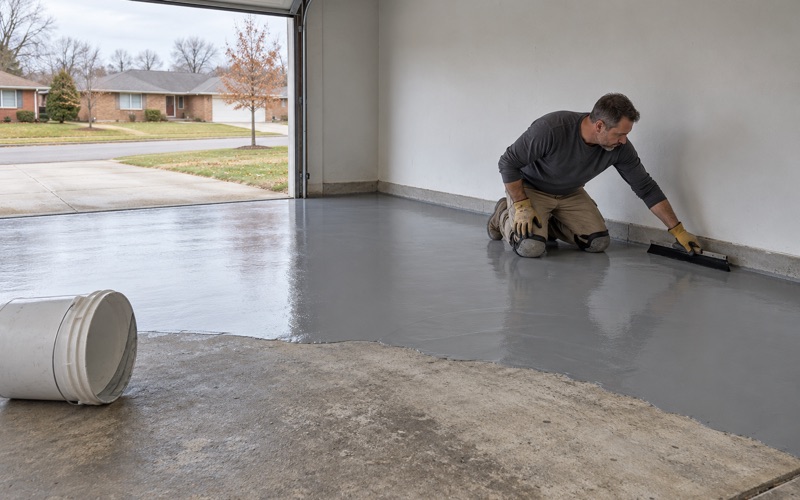
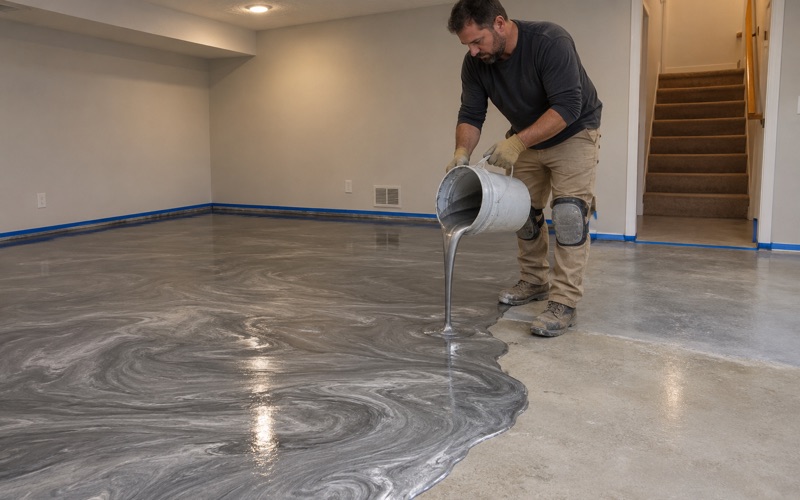
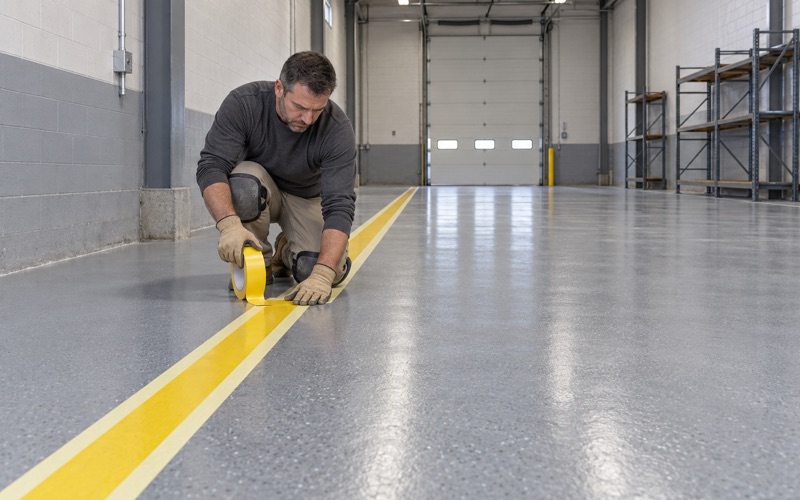
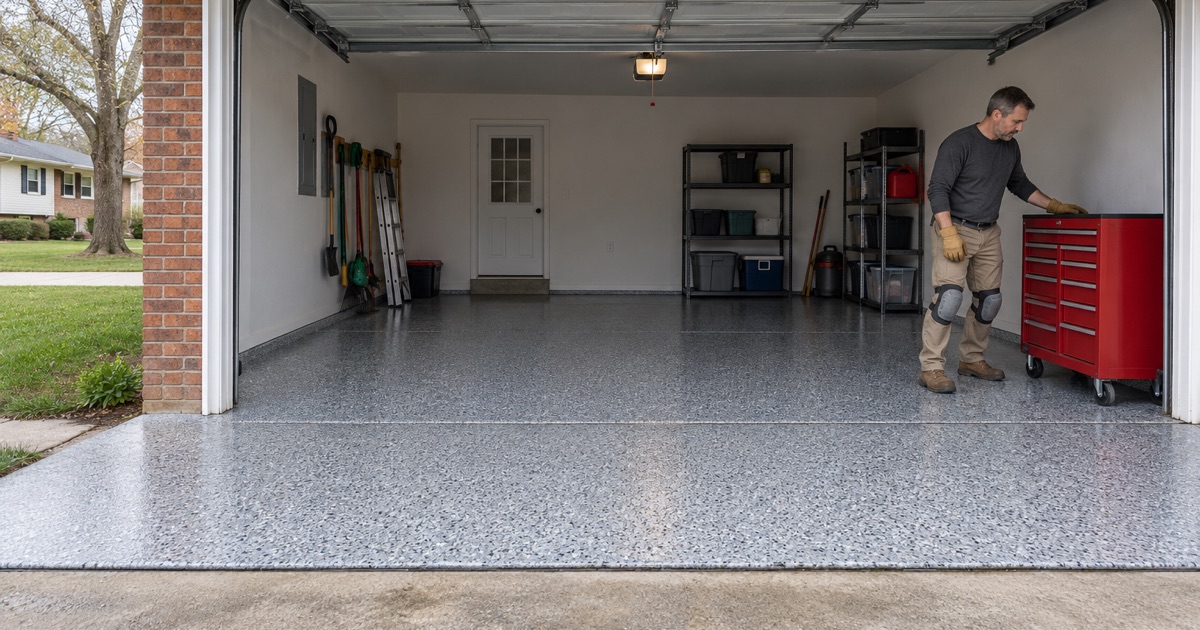
An epoxy garage floor job runs from a walk-through of the slab, through grinding, crack repair and moisture testing, to the base coat, broadcast and topcoat. We give you a written schedule that includes the day you can walk on the floor and the later day you can park on it. Knowing both dates up front means nobody drives onto a coating that has not finished curing.
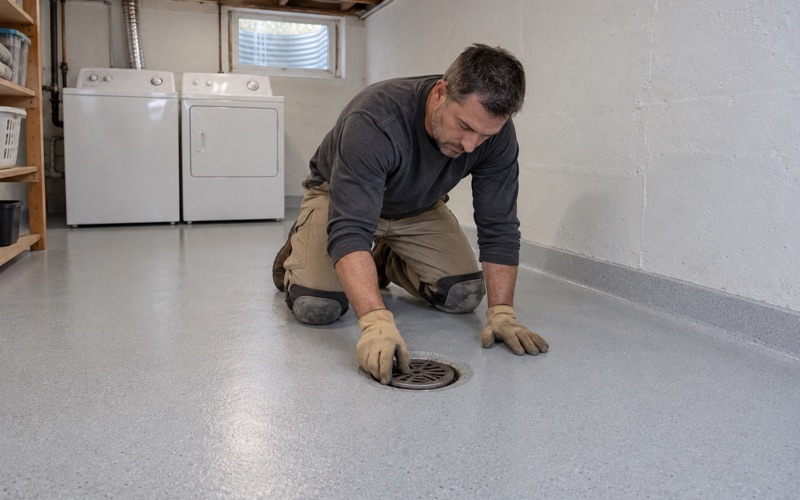
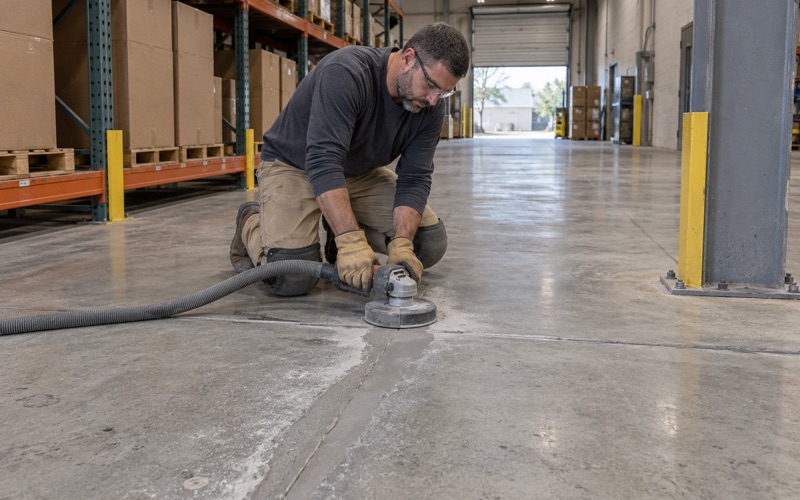
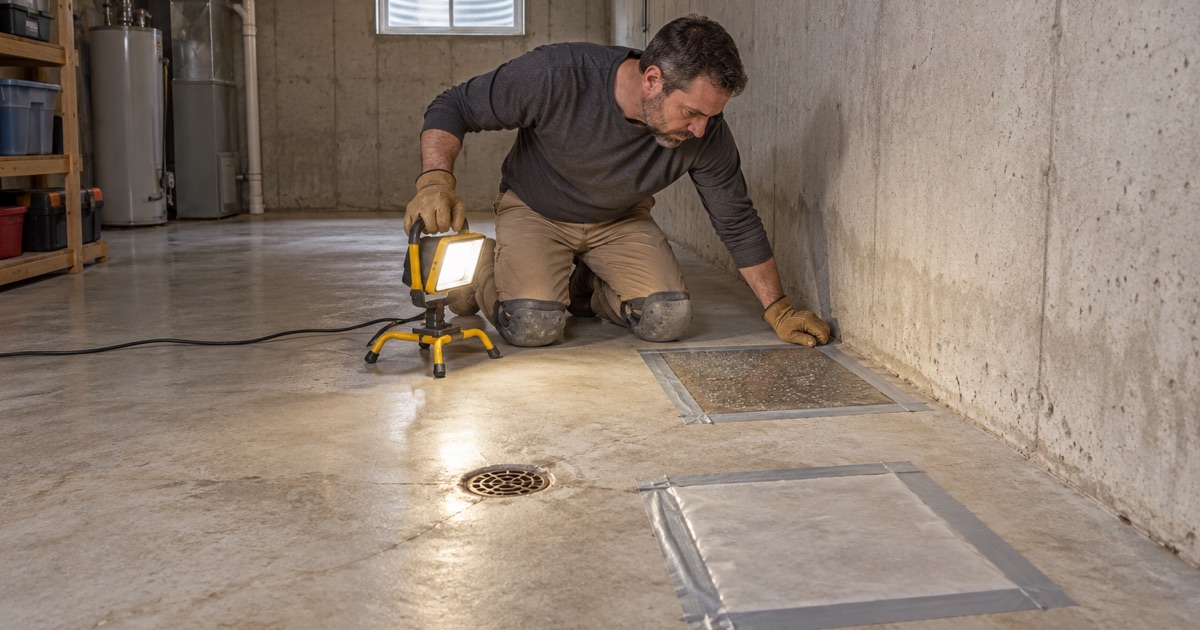
The walk-through matters more than the coating choice. It is where we read the cracks, look at old sealers or paint, check the drain and the apron joint, and decide whether the slab needs repair before it can be coated at all.
Diamond Grinding Before Any Garage Coating
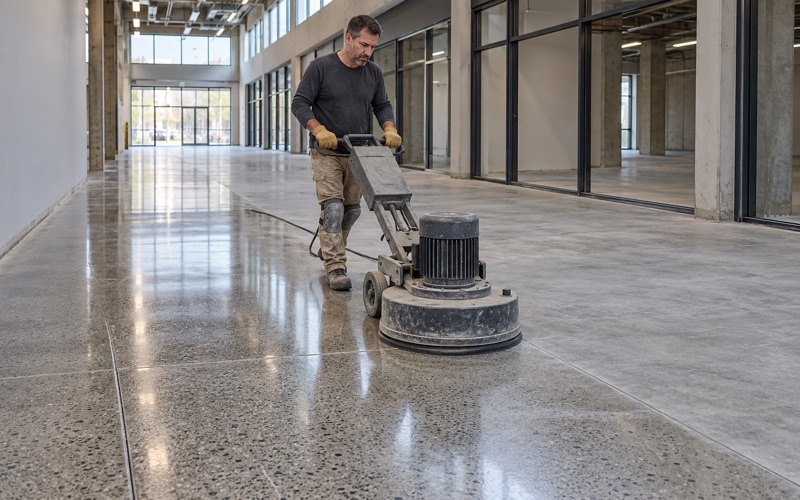
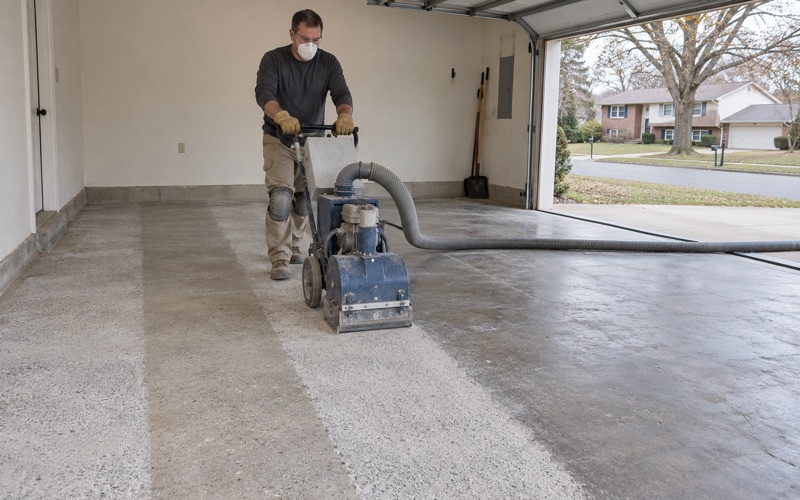
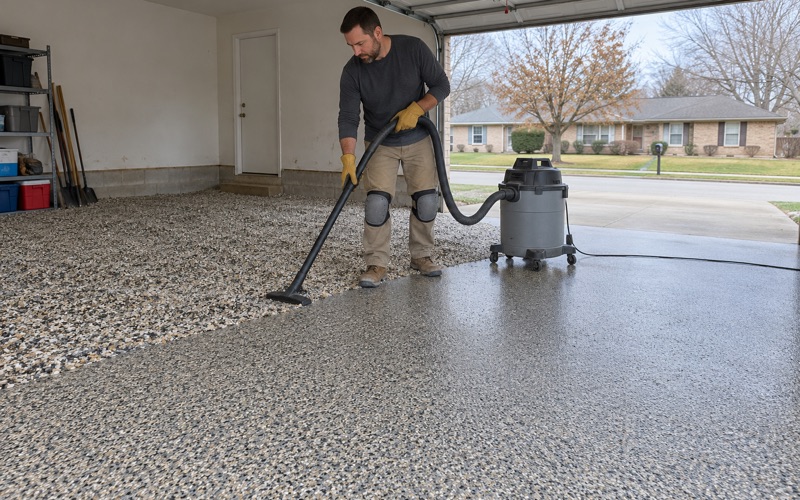
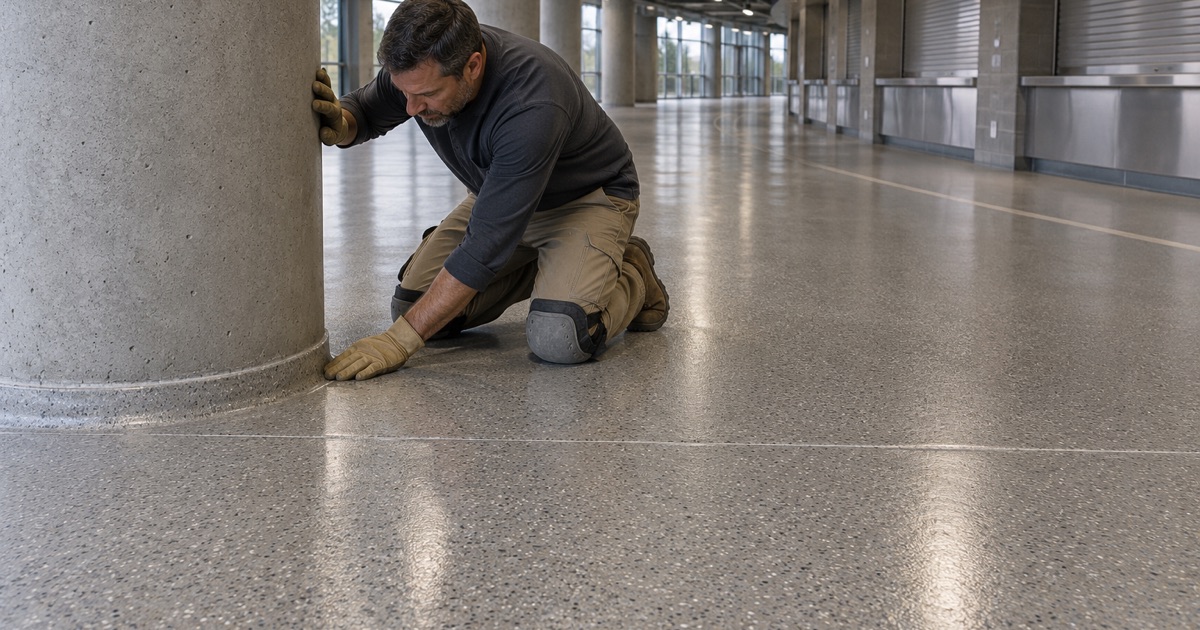
A coating applied over sealed, painted or glossy concrete sits on top of that layer instead of gripping the slab, and when the old layer lets go the new one goes with it. We grind the floor to an ICRI concrete surface profile suited to the system, removing sealer, paint and the weak top cream of the concrete. That open surface is what the primer locks into.
Garage Slab Moisture Testing
The model residential code exempts garage slabs from the under-slab vapor retarder it requires elsewhere, and Hoffman Estates adopted that code with the exception intact. So a newer garage can be just as damp underneath as an older one. We use a plastic sheet test under ASTM D4263 to screen the slab and move to calcium chloride or in-situ relative humidity testing when the screen raises a question.
Calcium Chloride Brine and Rock Salt Damage
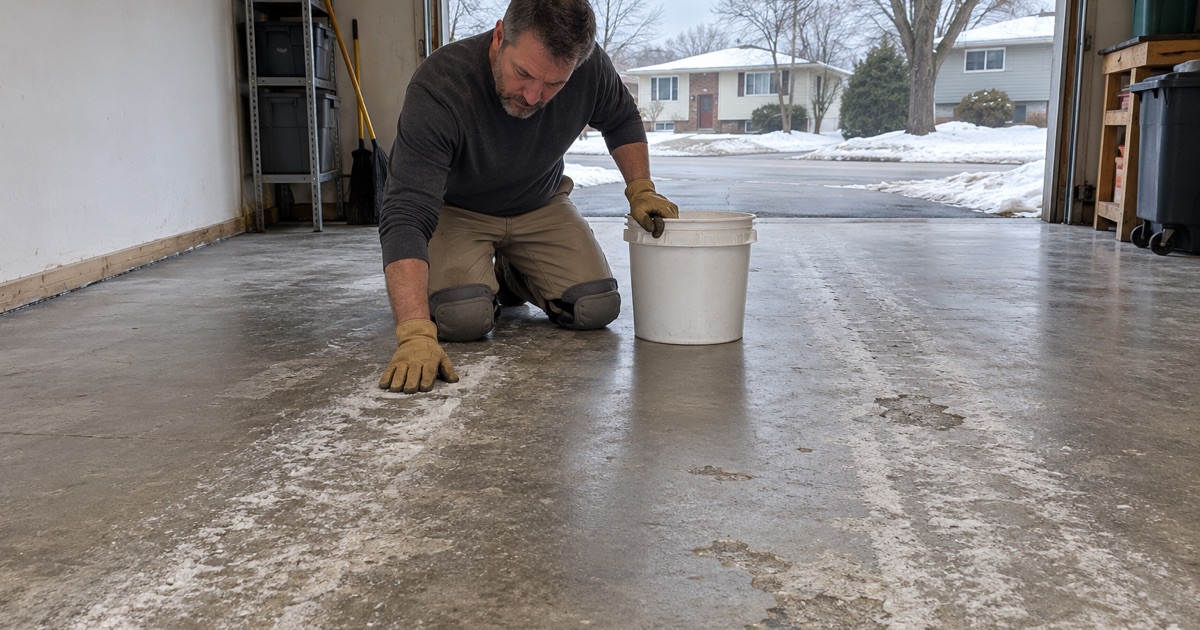
The brine that road crews spray and the rock salt that cakes on tires soak into bare concrete and freeze in its pores, which flakes the surface away over a few winters. A sealed coating keeps that brine on top of the floor, where it can be squeegeed out the door. We pick the topcoat for chemical resistance to deicers, not only for looks.
Winter Garage Coating and Spring Waits
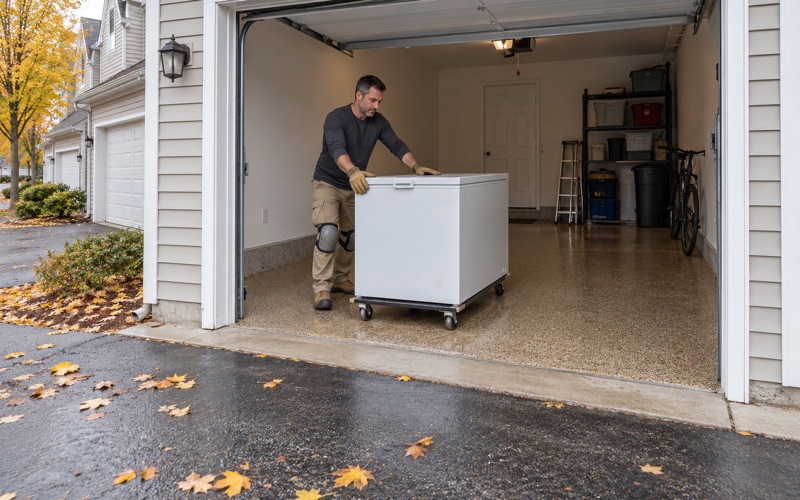
Resin needs a slab warm enough to cure and a surface that stays above the dew point while it does. An attached garage that shares heat with the house can usually be coated through the winter, but an unheated detached garage often cannot. We measure slab temperature and the dew point spread before booking and tell you plainly when the job should wait until spring.
Hot Tire Pickup and Coating Choice
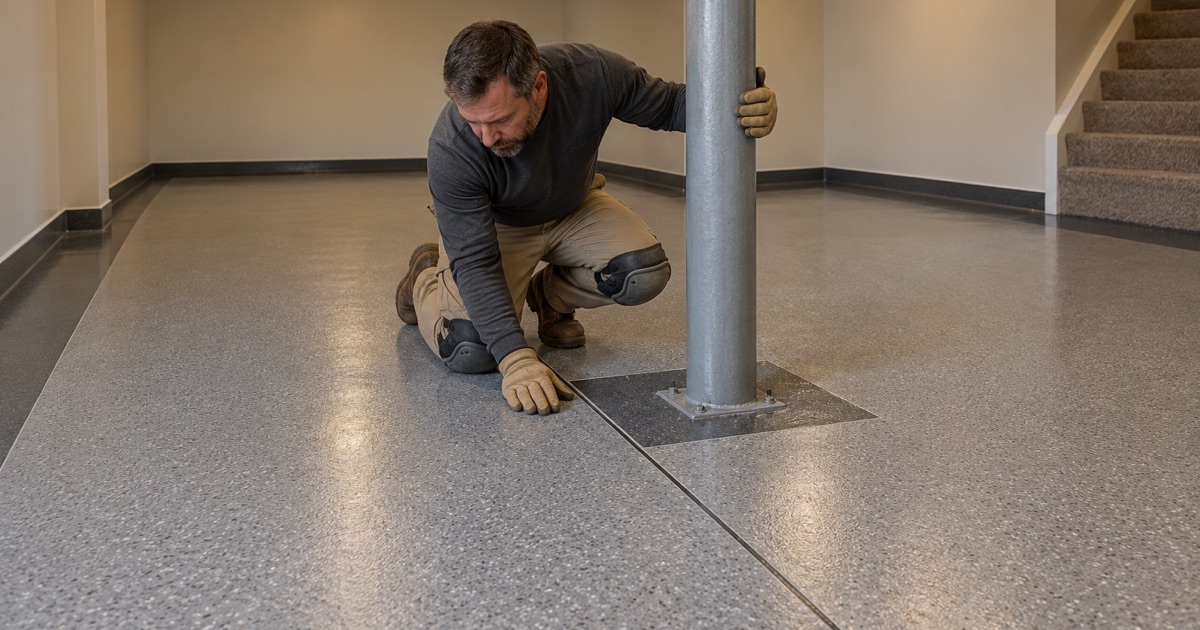
A tire that has just come off a highway is hot, and it softens a thin or poorly bonded coating enough to pull it off the floor when the car cools in place. That is called hot tire pickup, and it is the most common failure on cheap garage coatings. A ground surface, a full-thickness 100% solids epoxy base and a hard polyaspartic topcoat are what stand up to it.
DIY Garage Floor Kits vs a Professional System
Most store-bought garage kits are water-based epoxy over an acid-etched floor, which lays down a thin film on a weak profile. A professional system starts with mechanical grinding, uses a high-solids resin built to a measured thickness and adds a topcoat rated for tires and salt. The kit costs less up front, and the difference shows up the first time a warm tire sits on it.
What an Epoxy Garage Floor Costs
The price of a garage floor moves with the square footage, the condition of the slab and the system chosen. Crack and spall repair, removing an old coating, a moisture-mitigation primer and a full flake broadcast each add cost, and a solid color with a single topcoat costs least. We itemize every one of those in the proposal so two quotes can be compared line for line.
Four Times Stronger Claims, Explained
You will see coatings advertised as several times stronger than epoxy. Those numbers usually compare one lab property, such as abrasion or flexibility, under test conditions that may not match a garage floor. We explain what a claim measures, and point out that the bond to the slab, not the coating’s own strength, is what decides whether a floor lasts.
Coating Warranty Exclusions, Moisture First
Almost every floor coating warranty excludes failure caused by moisture coming up through the slab, and most also exclude slab movement, impact damage and cracks that reopen. We read those exclusions out before the job is sold, moisture first, and explain how the moisture test in our scope addresses the biggest of them.