
Hoffman Estates Epoxy Flooring installs flake epoxy floors in Hoffman Estates, IL, serving surrounding cities including Barrington, Lake Zurich, Wood Dale, Prospect Heights and Cary. Flake is the most requested garage floor finish we install, and in 20+ years we have learned that the chips are the easy part: the floor’s life depends on the slab preparation and the base coat beneath them.
A flake floor starts with a ground slab, a primer and a base coat of epoxy. While the base is wet, we broadcast colored vinyl chips across it, let it cure, scrape and vacuum the excess, and seal everything under a clear topcoat. The result is a textured, multicolored surface that hides dust and wear, adds grip and protects the concrete beneath.
The proposal names the base product, the broadcast density, the topcoat and the finished thickness. That lets you compare quotes on the same terms and check the finished floor against what was promised, rather than comparing a photo of a pretty floor with no specification behind it.
Vinyl Flake Blends and Chip Sizes
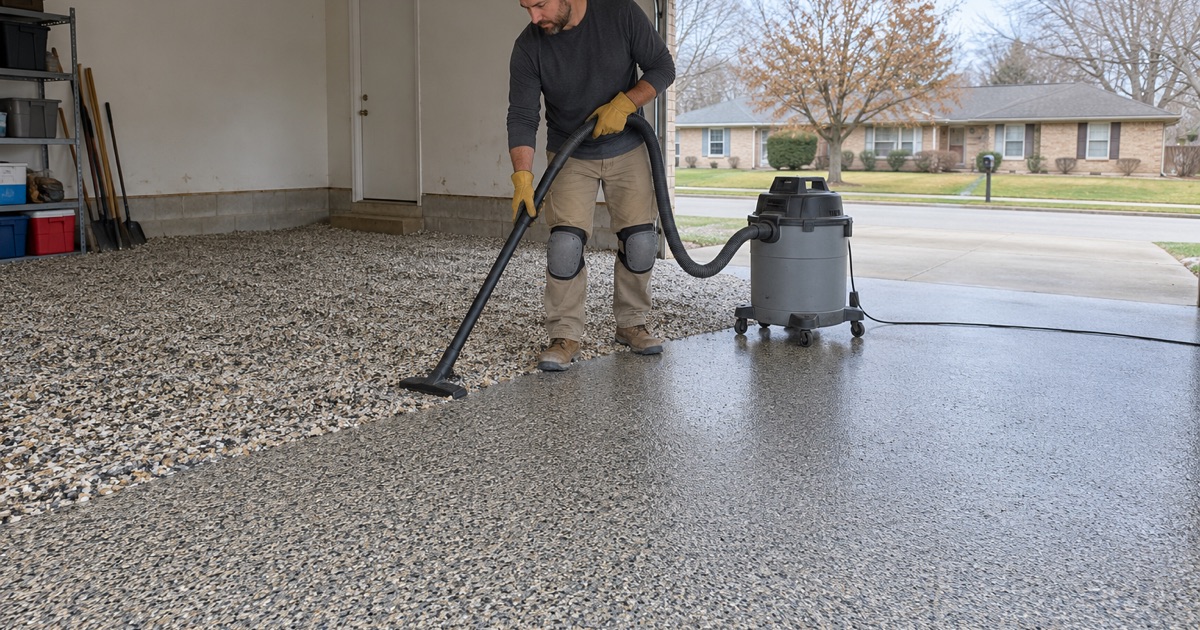
Flake blends combine several colors of vinyl chips, from neutral grays and tans to blends with flecks of blue, red or black. The blend sets the overall color of the floor, and a mix of light and dark chips hides dirt best. We bring physical sample boards rather than relying on photos, because chip colors read differently under garage lighting than on a screen.
Chip size changes the character of the floor. Larger chips give a bold, speckled look that suits large garages and commercial spaces, while smaller chips create a finer, more uniform texture that suits basements and smaller rooms. Mid-size chips are the most common choice for residential garages and balance texture with a clean appearance.
Full Broadcast Versus Partial Broadcast
In a full broadcast, we throw chips onto the wet base coat until it will not accept any more, which is called broadcasting to refusal. The base disappears entirely beneath the chips, and the floor gets maximum texture, coverage and camouflage. A full broadcast also hides the minor imperfections every older slab has, such as small patches and trowel marks.
A partial broadcast scatters fewer chips, letting the base color show between them. It uses less material and costs less, but it shows more of the slab’s surface and offers less texture. We recommend full broadcasts for most garages because they handle salt, tires and daily dirt best, and partial broadcasts where a lighter, more open look is the goal.
Base Coats, Topcoats and Thickness
The base coat holds the chips and bonds to the ground concrete, so its quality matters more than its color. We use a 100% solids epoxy base, which keeps the thickness we apply rather than shrinking as solvents or water evaporate. Under a flake floor, that full-thickness base is what resists hot tire pickup and impact.
The clear topcoat seals the chips and carries the wear. A polyaspartic topcoat resists ultraviolet yellowing, road salt, oil and gasoline, which makes it our usual choice for garages that face the street. We can leave the topcoat a little textured for grip or apply it in two coats for a smoother, easier-to-clean surface.
Flake Floors in a Salt-Belt Garage
A northern Illinois winter brings calcium chloride brine and rock salt into the garage on every tire. On bare concrete, that brine soaks in and breaks the surface apart through freeze-thaw cycles. A sealed flake floor keeps the brine on the surface, where it can be squeegeed out the door, and the chips hide the white salt residue between cleanings.
The edges matter most. Salt collects along the walls, under shelving and at the door, so we grind and coat edge to edge and seal the strip along the base of each wall. Many failing garage floors start peeling at those margins because the installer stopped short of the walls.
Preparation Under the Chips
No amount of flake can make up for poor preparation. We grind every slab with diamond tooling and never acid etch, because an etched surface gives the base coat a weak, uneven profile. Cracks and spalls are filled and ground flush, and old coatings are removed completely.
We also moisture test every slab. The model code exempts garage slabs from the under-slab vapor retarder it requires elsewhere, and the village kept that exception, so moisture can rise through a garage floor and push a coating off. A plastic sheet screen tells us whether to look closer with calcium chloride or relative humidity testing and whether a moisture-mitigation primer belongs under the base.
Temperature is the last piece of preparation. The base coat has to stay wet long enough to accept the chips and then cure fully before scraping, and both depend on a slab that is warm and above the dew point. An attached garage that borrows heat from the house can usually be done through the winter, but an unheated detached garage often has to wait for spring, and we would rather tell you that than lay chips into a base that will not cure properly.
Flake Floors Beyond the Garage
The same system works well in basements, laundry rooms, mudrooms and home gyms, where a washable, textured surface matters more than a showroom finish. In a basement, the moisture test decides the primer before any chips are chosen, because a decorative broadcast does not change what the slab underneath can tolerate. Smaller chips and softer blends tend to suit these interior rooms better than the bold mixes popular in garages.
Commercial spaces use flake floors in break rooms, locker rooms, retail back rooms, auto service bays and showrooms. There, we may increase the base thickness, add a second topcoat or blend quartz into the broadcast for extra grip and wear resistance. Work is scheduled around business hours, and fast-curing topcoats help a space reopen quickly.
- 20+ Years Coating Concrete
- Moisture Testing in Every Scope
- Written Contract on Every Home Job