
Hoffman Estates Epoxy Flooring installs commercial kitchen flooring in Hoffman Estates, IL, serving surrounding cities including Barrington, Lake Zurich, Wood Dale, Prospect Heights and Cary. A kitchen floor takes more punishment than almost any other surface we coat, and after 20+ years we choose the system around the heat, water and cleaning routine of each kitchen rather than around a single product we prefer.
Restaurant kitchens, school and hospital food service, hotel banquet kitchens and food hall stalls all share the same problems: hot water, steam, grease, food acids, dropped pans and daily washdowns. Floors that cannot handle those conditions crack, delaminate and harbor bacteria in their seams, which brings both repair bills and inspection trouble.
We work around the hours a kitchen has to stay closed, often overnight or over a weekend, and the proposal names the system, the coving height, the texture and the reopening time for each zone. Every product is chosen within the Illinois VOC limits for floor coatings.
Urethane Cement for Hot, Wet Zones
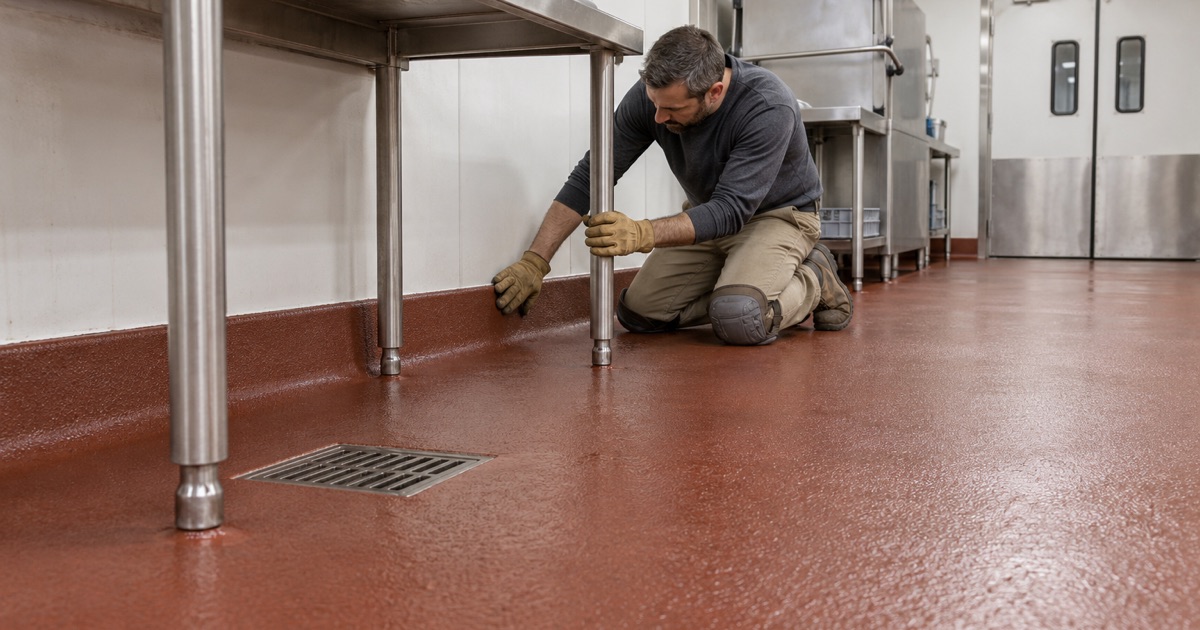
Urethane cement is a resin and cement hybrid built for thermal shock, moisture and chemical exposure. When boiling water from a kettle or a steam cleaning hose hits a cold floor, an ordinary epoxy can soften, crack or lose its bond, but urethane cement is designed to tolerate those sudden swings. It also stands up to grease, sugars, food acids and the strong cleaners kitchens use daily.
In most kitchens we install urethane cement in the cook line, dish area and wash zones, where heat and water are constant. Dry storage, offices and dining-adjacent areas may use a decorative epoxy or polished concrete instead. Splitting the kitchen this way puts the most durable system where it is needed and keeps costs in line elsewhere.
Urethane cement is also applied thicker than a typical decorative coating, often troweled as a mortar rather than rolled as a film, which gives it the impact resistance to survive dropped stock pots, rolling racks and the steel legs of moved equipment. The proposal names the build thickness for each zone, so the cook line is not quietly given the same thin system as the dry storage room.
Food Code Floors and Integral Coving
The Illinois Food Code follows the 2022 FDA Food Code, which calls for indoor floor surfaces in food areas to be smooth, durable and easily cleanable. Section 6-201.13 addresses floor and wall junctures, and the common practice for kitchens cleaned with water is a coved, sealed juncture that leaves no gap where the floor meets the wall.
We build an integral cove by carrying the floor system up the base of each wall in one continuous piece, rounding the corner so mops and water clear it easily. Local health officers apply the code, and requirements vary by jurisdiction, so we confirm expectations with the local inspector before setting the cove height. In Hoffman Estates, food facility inspection is handled by a village Environmental Health Officer working with Cook County.
Slip Resistance That Still Cleans
Section 6-201.11 of the Food Code requires floors to be smooth and easily cleanable, but it expressly allows anti-slip floor coverings in areas where safety calls for them. Kitchens with grease and water on the floor are exactly those areas. We broadcast aggregate, such as graded quartz, into the floor system to create a texture that grips under wet shoes.
The right texture balances grip against cleanability. Too coarse and it traps grease and wears out deck brushes; too fine and it loses grip once grease builds up. We show texture samples and adjust the broadcast and topcoat for each zone, often with a heavier texture in the cook line and a lighter one in prep and storage areas.
Drains, Slope and Equipment Detailing
Water has to reach the drain, so the floor around floor sinks, trench drains and area drains is sloped and terminated cleanly into each fixture. Low spots that hold water become slip hazards and breeding grounds for bacteria. We correct slope where needed before the floor system goes down and seal drain edges so water cannot get under the floor.
Fixed equipment such as walk-in coolers, hoods and cooking lines needs careful detailing. We cove around equipment curbs and legs, seal penetrations and coordinate with equipment vendors when items must be moved. Walk-in cooler and freezer floors get systems rated for cold temperatures and condensation.
Scheduling Around Service
Most kitchens cannot close for long, so we plan removal, grinding, repair and installation around closures. Small kitchens can often be completed over a weekend, and larger ones are phased by zone. Urethane cement systems cure quickly enough to allow a fast return to service, and we schedule against slab temperature so the cure is complete when the kitchen reopens.
Old tile, quarry tile and failing coatings are removed and the slab is ground clean. Kitchens with decades of grease soaked into the concrete need extra cleaning and grinding, and we moisture test the slab, because a slab without a vapor retarder beneath it can push a new system off just as it would in a basement.
Before a job is scheduled, we confirm the village’s contractor registration, bond and insurance rules and ask the permit desk whether the work counts as finish work or needs a permit, since Illinois issues no state license for flooring. Owners and managers get a written scope that names the closure windows, the reopening time and the warranty exclusions, with moisture read out first, so there are no surprises when the kitchen goes back into service.
- 20+ Years Coating Concrete
- Moisture Testing in Every Scope
- Written Contract on Every Home Job