Hoffman Estates Epoxy Flooring installs metallic epoxy floors in Hoffman Estates, IL, serving surrounding cities including Barrington, Lake Zurich, Wood Dale, Prospect Heights and Cary. A metallic floor is the most hands-on system we build, and 20+ years of preparing concrete for coatings is what keeps the decorative layer from becoming an expensive film over a weak slab.
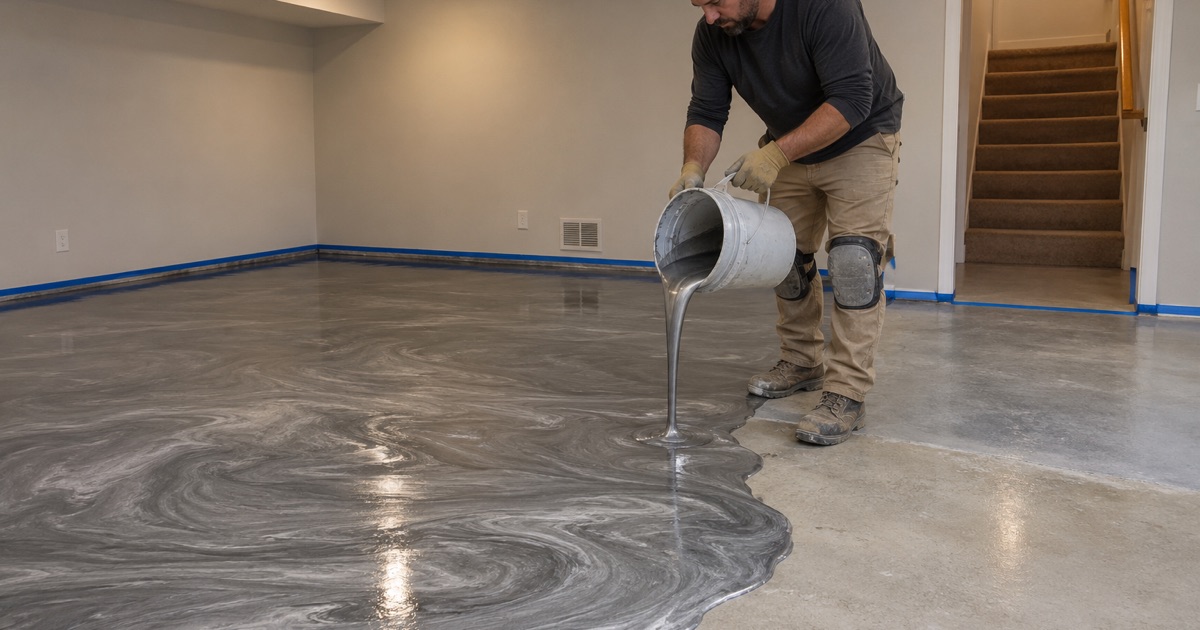
Metallic epoxy uses resin loaded with fine metallic pigments, which our installers move by hand while the resin is wet. The pigments swirl, settle and catch the light, creating a marbled, three-dimensional finish that looks like poured stone, molten metal or a deep pool, depending on the colors and technique.
That finish is only as durable as what lies underneath it. Every metallic floor we install sits on a slab opened with a diamond grinder, screened for moisture and repaired where needed, with each layer and the finished thickness named in the proposal.
Where Metallic Epoxy Works
Finished Basements and Home Bars
Metallic epoxy suits a finished basement, a home bar or a media room, where a seamless, reflective floor adds depth without grout lines. The basement slab still has to pass a moisture test first, because soil sits against every side of it and moisture rising beneath a decorative film will lift it.
Where readings allow, a moisture-mitigation primer goes down beneath the metallic system. Where they do not, we recommend another flooring choice rather than a floor likely to fail.
Showrooms, Offices and Retail Spaces
In showrooms, offices, salons and retail spaces, a metallic floor creates a distinctive, polished impression. It reflects light, cleans easily and can be colored to match brand palettes. We schedule commercial metallic installs around business hours, often over weekends or in phases. Because the pattern has to be laid continuously, larger areas need careful planning to keep visible seams at doorways or natural breaks.
Showroom-Style Garages
Some homeowners want a garage that showcases a car collection or doubles as a hobby space, and a metallic floor delivers that look. A garage brings rock salt, brine and hot tires, though, so the system needs a full-thickness base and a hard, chemical-resistant topcoat. We often recommend flake for the daily-driver bays and metallic for a dedicated display area, so the decorative floor is not taking the worst of the winter.
How a Metallic Floor Is Built
Grinding and Repair
We grind the slab edge to edge with diamond tooling to open the surface and remove old coatings, sealers and contaminants. Cracks and spalls are filled and ground flush, because a metallic finish shows every ridge and dip beneath it. A flat, sound surface matters more under metallic epoxy than under a flake floor, since there is no broadcast to camouflage what lies below.
Primer and Tinted Base Coat
A primer soaks into the ground concrete for bond, followed by a tinted epoxy base coat. The base color sets the background tone that shows through the metallic layer, so choosing it is part of the design decision. Dark bases create depth and contrast, while lighter bases give a softer, more pearlescent look.
The Metallic Layer
The metallic epoxy is mixed, poured and spread, then worked by hand with rollers, brushes, sprayers or air tools to move the pigments. The technique creates the pattern: wide sweeps produce flowing veins, while light misting creates cells and lacing.
The working window is limited, because the pattern locks in as the resin begins to gel. That is why metallic floors need an experienced crew working in coordinated sections.
Topcoat Protection
A clear topcoat seals the metallic layer and carries the wear. We typically use an aliphatic polyaspartic or urethane topcoat, which resists scratches, chemicals and ultraviolet ambering better than epoxy alone. In areas that may get wet, a fine anti-slip additive goes into the topcoat.
The topcoat also keeps the metallic layer from being worn away by daily traffic. Without it, the pigmented surface would scuff and dull where feet and chair legs travel most, and the pattern would fade unevenly. With it, the decorative layer stays sealed beneath a clear wear surface that can be refreshed later.
Design Choices for Metallic Floors
Color Combinations
Metallic floors can use a single color or blend two or three pigments for depth. Grays and silvers suit modern spaces, coppers and bronzes add warmth, and blues and greens can mimic water or stone. We create sample boards from your chosen colors so you can see them under the lighting in your space.
Lighting changes a metallic floor more than any other system. Warm incandescent bulbs pull coppers forward, cool LED fixtures sharpen silvers and blues, and daylight from a walkout basement door shifts the floor through the day. We look at the room’s lighting during the walk-through and suggest combinations that will read the way you expect.
Finish Techniques
Common techniques include a lava flow with bold veins, a soft cloud effect, ripples and ocean-like movement, and a granite or marble look. Each technique uses different tools and timing, and we show examples so you can choose a direction before the job. No two floors come out exactly alike, which is part of the appeal and something we explain clearly before you commit.
Sheen and Texture
A high-gloss topcoat brings out the most depth in a metallic floor but shows dust and fine scratches more readily. A satin topcoat softens reflections and hides everyday wear. Adding a fine anti-slip grit gives some texture underfoot without obscuring the pattern.
Living With a Metallic Floor
Cleaning and Care
Dust mop regularly and clean with a neutral pH cleaner and a soft mop. Avoid harsh chemicals, abrasive pads and dragging heavy furniture. Felt pads under chairs and walk-off mats at entrances reduce scratches. A worn topcoat can be lightly abraded and recoated to refresh the surface without redoing the metallic layer beneath.
Slab Movement and Cracks
A metallic floor is a film that follows the slab under it. If the concrete settles or a crack continues to move, the coating will move with it, and the crack can telegraph through the pattern. We assess cracks before quoting and explain which ones are likely to stay quiet.
Saw-cut control joints can be honored with a deliberate cut line through the finished floor or filled and coated over, depending on whether the slab is likely to move at those joints. Honoring them gives any movement a clean place to occur instead of a random crack through the middle of the pattern.
Warranty Exclusions
We read warranty exclusions before the job is sold, starting with moisture, which almost every manufacturer excludes. Slab movement, impacts and abrasion damage are also common exclusions. Knowing them before work begins means fewer surprises later.
The moisture test in our scope exists because of that first exclusion. A metallic floor costs more per square foot than most systems we install, and losing it to moisture that a simple test would have caught is the outcome we work hardest to prevent. Every home job also comes with a written contract and the state consumer-rights pamphlet before work begins.
Repairs and Touch-Ups
Because every metallic pattern is unique, an invisible spot repair is rarely possible. A gouge can be filled and topcoated so it is protected and smooth, but the pattern in that patch will not perfectly match its surroundings. For larger damage, recoating a full section to a natural break, such as a doorway or a saw-cut line, gives the cleanest result.
- 20+ Years Coating Concrete
- Moisture Testing in Every Scope
- Written Contract on Every Home Job